Existing homes
Building & pest inspections in Melbourne before you buy or bid.
An independent, visual assessment of the property’s accessible building elements and timber-pest risk—organised to support a practical purchasing decision.
What the inspection is designed to reveal
The inspection records significant visible defects, safety concerns, moisture indicators and timber-pest evidence or risk factors in areas that can be safely accessed. It also records the areas that could not be inspected, because those limitations can matter just as much as the observations.
Buying an established property? The dedicated pre-purchase inspection guide explains timing, access and what happens after the inspection.
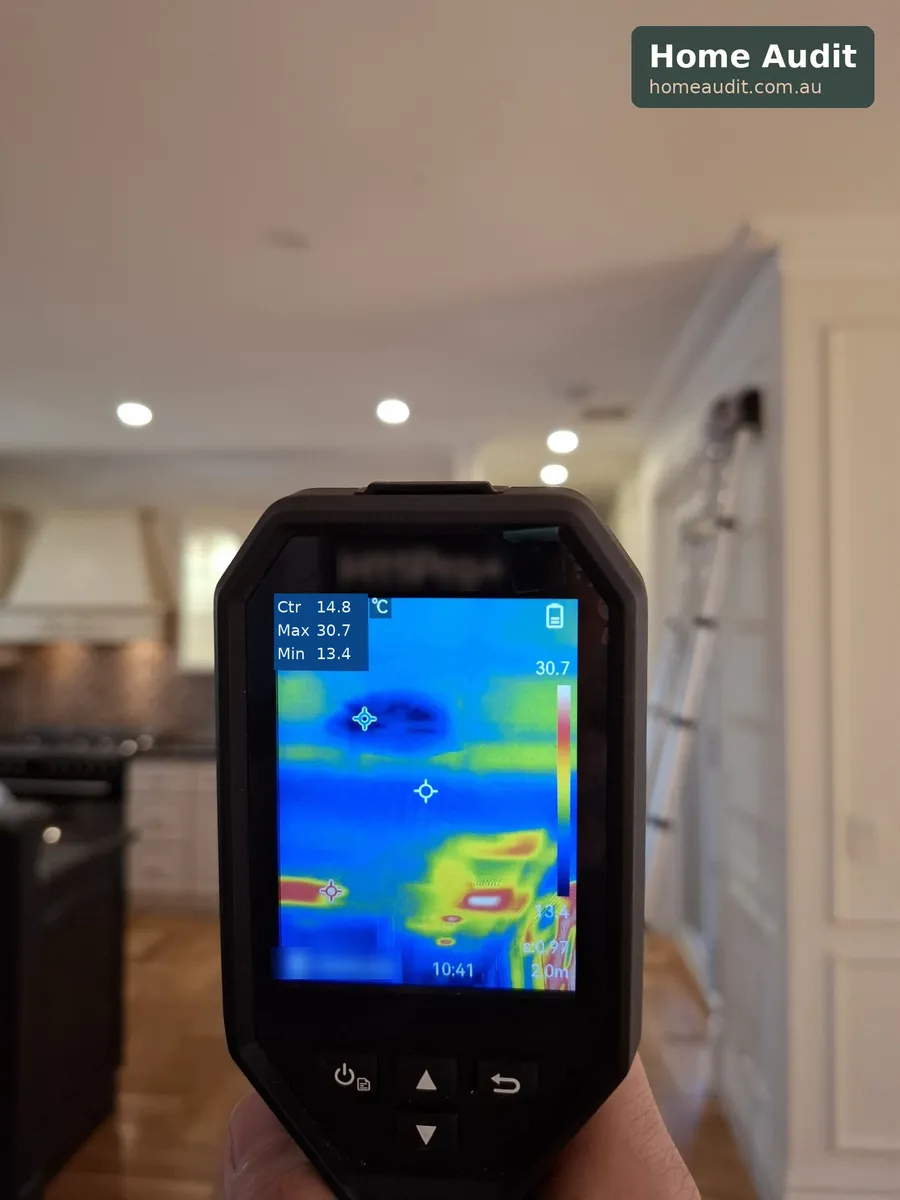
From a recent building & pest inspection
A ceiling that looked fine was hiding a leak from upstairs.
- Looked normal. The ground-floor ceiling had no stain or visible damage.
- Cold spot. A thermal camera showed a patch about 1.4 °C cooler than the ceiling around it.
- Water confirmed. A moisture meter confirmed water in that spot. It was coming from the floor above.
The finding went into the written report, with photos. The buyer used it to renegotiate the price.
Where conditions allow and it is necessary, our inspector may use thermal imaging as an extra check.
Get a quoteBuilding and timber-pest scopes work together
Moisture, poor drainage, subfloor ventilation and concealed timber are building conditions that can also increase timber-pest risk. Combining the scopes gives a more connected view of the property than treating each concern in isolation.
What the inspection cannot do
The standard inspection is visual and non-invasive. It does not involve cutting openings, moving fixed finishes or guaranteeing conditions inside concealed construction. Roofs, roof spaces and subfloors are inspected only where access and safety allow.
After the inspection
Your report is where our help starts, not where it ends. Here is what happens from booking to the repairs.
Get a price and book online
Fill in the quote form and pay online. We then arrange access with the agent.
We inspect the home
A Registered Building Inspector inspects the home and writes the report.
Read the summary first
The Summary page lists major defects, safety hazards and any further inspections we recommend. Defect numbers match the marks on the floor plans. Questions? Reply to the report email: up to 15 minutes with the inspector is included.
Repair Budget Assessment
Indicative cost ranges for repairing the defects in your report, for your budget and any price discussion. You can use your own tradespeople.
Make your decision
Go ahead, renegotiate or step back, together with advice from your lawyer or conveyancer.
Scope, quotes and repair checks
If you go ahead, we can turn the defects into a scope of works, help you compare quotes from tradespeople you choose and check the work at key stages.
What the report is for
The report brings the visible findings, photographs and access limitations into one record. It is intended to help the purchaser understand the observed condition and decide whether further investigation, specialist advice or contract guidance is needed.
Buyers use the report in four main ways:
- Renegotiating the price. Together with quotes from licensed tradespeople, the findings can support a request to lower the price. This can cover repair costs or the risk you take on.
- Ending the contract. If your contract has a building inspection condition, the report can be the evidence you rely on. Whether you can end the contract depends on its wording, so ask your lawyer or conveyancer. Many Victorian contracts refer to a major building defect or a major structural defect, and the difference matters.
- Checking before settlement. Take the report to your final inspection before settlement. If the condition is inconsistent with the report, your lawyer or conveyancer can raise it with the vendor.
- A record for later. The report records the condition of the home when you bought it. A few years later, you can compare it and see whether recorded defects have got worse. This helps you decide when to repair or renovate.
The report is one part of the decision. Use it together with advice from your lawyer or conveyancer and quotes from licensed tradespeople.
The report records the building evidence. Your contract determines how that evidence may be used. Read the Victorian inspection-clause guide.
Have an auction or contract deadline?
Add the deadline to your quote request. Availability, property access and reporting timing can then be considered together.
Auction in the next day or two? See our last-minute walk-through.
Request a quote